- Talent Edge Weekly
- Posts
- Talent Edge Weekly - Issue #348
Talent Edge Weekly - Issue #348
New Ebook on creating stakeholder value through HR, AI's near-term impact on jobs, unlocking organizational capability, AI-enabled performance management, and AI fluency as a skill.

Brian Heger
May 24, 2026

SPONSORED BY

Welcome to this new issue of Talent Edge Weekly!
First, a shout-out to Bonnie Levitt, Chief HR Officer at Citadel Credit Union, for referring new subscribers to Talent Edge Weekly. Thank you, Bonnie, for your support of this newsletter!
PRESENTED BY Lightcast
Skills Transformation: A New Paradigm for Your Workforce
Your workforce is changing faster than your org chart can keep up. Roles stay the same, but the skills behind them don't. And every day spent managing talent by job title means your making hiring decisions, planning budgets, and shaping careers without a clear view of what your people can actually do.
Becoming a skills-powered organisation changes that. But knowing where to start is where most transformations stall.
Download 10 Steps to Skills-Powered Transformation — the blueprint HR and L&D leaders are using to move from job-title thinking to skills-first strategy.
Inside, you'll get:
The 10-step framework covering process, policy, people, and technology at every stage
A SWOT analysis to pressure-test your readiness and spot the risks before they hit
Practical actions you can take this quarter — from running a skills audit to building a skills taxonomy your business will actually use
The tools and platforms leading organisations are deploying to make skills data work
Whether you're just exploring skills-based work or already mid-transformation, this blueprint shows you what good looks like — and how to get there without the false starts.
Have a product or service that could provide value to our active 58,000+ Talent Edge Weekly subscribers? Become a potential sponsor.
THIS WEEK'S CONTENT
Below are links and descriptions of the topics covered in this issue. If you're interested in my deep dive, you can read the full newsletter.
The Age of HR: Delivering Stakeholder Value Through Strategic Organizational Capability: Talent, Leadership, and Culture | Edited by Anthony Nyberg, Rebecca Kehoe, Dave Ulrich, and Patrick Wright | A new open-access 338-page Ebook across 61 chapters featuring 85 global thought leaders on how HR can create stakeholder value.
The AI Jobs Transition Framework: Mapping AI's Near-Term Impact on Jobs | OpenAI Economic Research | A recent 32-page report argues that standard AI "exposure" measures alone are not sufficient to predict near-term job disruption and introduces a four-dimension framework instead.
Unlocking Workforce Capacity Through Ways of Working | Brian Heger | My cheat sheet with 10 diagnostic questions to help identify opportunities to unlock workforce capacity through more effective ways of working.
Gen AI Could Fix Performance Reviews — or Make Them Even Worse | Harvard Business Review | A new article argues that most organizations are using AI to produce more polished versions of the same flawed performance reviews rather than to fix the underlying information quality problem.
One Year Later: Raising the AI Fluency Bar for Every Zapier Hire | Zapier | A recent article by Tracy St. Dic, Global Head of Talent at Zapier, shares the company's V2 AI Fluency Rubric, offering a framework for defining and assessing AI fluency.
Also, check out my job cuts tracker & Chief HR Officer move of the week, which is an excerpt from my CHROs on the Go platform.
My Community for Internal HR pracititoners
If you’re an internal HR practitioner who wants to go deeper with me and other internal HR practitioners on talent topics tied to your most critical priorities, learn about my private community, Talent Edge Circle.
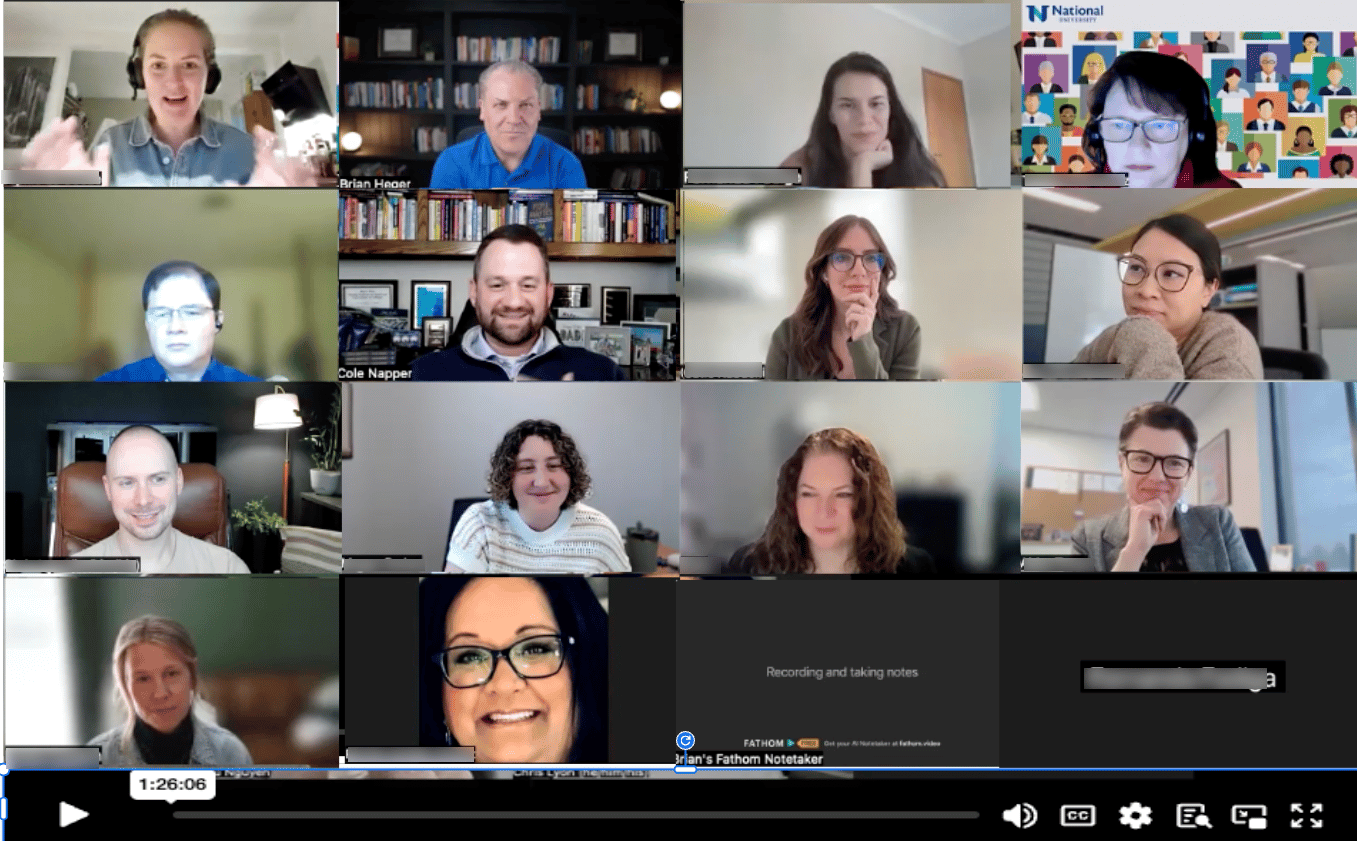
🗓️ June 17, Adam Gibson, author of Agile Workforce Planning, will join Talent Edge Circle for a discussion on strategic workforce planning.
🗓️ July 22, Dave Ulrich, professor at the Ross School of Business (University of Michigan) and co-founder of The RBL Group, will join Talent Edge Circle for a discussion on creating stakeholder value through HR.
⬇️ Now let’s dive in.

THIS WEEK'S EDGE

HR CREATING STAKEHOLDER VALUE
The Age of HR: Delivering Stakeholder Value Through Strategic Organizational Capability: Talent, Leadership, and Culture | Edited by Anthony Nyberg, Rebecca Kehoe, Dave Ulrich, and Patrick Wright
A new open-access 338-page ebook across 61 chapters featuring 85 global thought leaders on how HR can create stakeholder value.

The field of HR has grown immensely, not only in terms of the value it creates for stakeholders, but also in the sheer number of areas within its remit. That volume and complexity can make it challenging to connect HR's work in an integrated way, which is why frameworks that cluster the work around a few vital capability areas are so useful. This new open-access Ebook, edited by Anthony Nyberg, Rebecca Kehoe, Dave Ulrich, and Patrick Wright, does exactly that: helping HR practitioners think more strategically about how HR creates value for employees, customers, investors, and communities. Organized around four human capability domains (talent, leadership, organization, and the HR function), it brings together 85 global thought leaders in the HR space and includes 61 chapters spanning seven themes: business context, business agenda, talent, leadership and organization, culture, the HR function, and personal growth for HR leaders. It covers everything from succession planning and workforce analytics to culture as competitive advantage, the CHRO as business leader, building organizations ready for agentic AI, and so much more. Given that succession planning is a priority for many Talent Edge Weekly readers, I want to highlight the chapter by Marcia Avedon and Anthony J. Nyberg (p. 131), which covers succession and talent reviews, calibration tactics, key talent metrics, and more. A special thanks to all contributors who helped bring this excellent resource to the field. And for those in my private community for internal HR practitioners, Talent Edge Circle, I'm looking forward to Dave Ulrich joining us in July for a discussion on creating stakeholder value through talent, leadership, organization, and the HR function.

AI’S IMPACT ON JOBS
A recent 32-page report argues that standard AI "exposure" measures alone are not sufficient to predict near-term job disruption and introduces a four-dimension framework instead.

As organizations assess AI’s impact on jobs and work, many rely on AI exposure rankings, or the percentage of job tasks AI has the technical capability to perform, as the primary lens for assessing job disruption risk. But this new 32-page report argues that AI exposure alone is not enough to predict near-term disruption. Instead, the researchers introduce a four-dimension framework: 1) technical capability, which the report views as AI exposure, 2) human necessity, or whether regulatory, relational, or physical factors require a human to remain in the role, 3) demand elasticity, or how demand for a job might change as AI lowers its cost, and 4) observed ChatGPT usage data, or how workers in those roles are already using AI in practice. Applied across nearly all US occupations, the framework and analysis classifies jobs into four archetypes: 18% face higher short-term automation risk, 24% will reorganize as task composition shifts but workers remain necessary, 12% could grow as AI lowers costs and unlocks latent demand, and 46% are likely to see less near-term change. One takeaway is that relying on AI exposure alone can lead to inaccurate assumptions about job loss risk, since many highly exposed jobs may be redesigned or expanded rather than immediately automated. For HR practitioners, the 24% of roles likely to reorganize may be one of the most practical starting points, since these roles create more immediate opportunities for role redesign, reskilling, workforce planning, and succession planning conversations.

UNLOCKING WORKFORCE CAPACITY
My cheat sheet with 10 diagnostic questions to help identify opportunities to unlock workforce capacity through more effective ways of working.

In a recent post, I shared my cheat sheet with eight questions to help determine whether a newly vacant role truly needs to be backfilled when the incumbent exits. The goal was to help move from reactive hiring—where newly vacated roles are often assumed to need a backfill— to being more intentional. Reactive hiring often leads to a costly overhiring cycle, where organizations miscalculate workforce needs, resort to layoffs when supply outpaces demand, then rehire when demand returns. A question I like to ask before deciding to backfill a role is: how can improved ways of working unlock trapped workforce capacity to accomplish more? Trapped capacity is time and effort spent on work that adds little value and could be eliminated, simplified, or redirected to higher-priority work. For example, a team spending 30% of its time in low-value meetings or navigating approval delays has significant capacity waiting to be unlocked. AT&T saved 3.6 million hours and over $230 million in three years by eliminating outdated processes, tools, and policies hindering effective ways of working. Shopify reclaimed 76,500+ meeting hours by cutting recurring meetings and completed 25% more projects. Where is there trapped capacity on your team and organization? My cheat sheet includes 10 diagnostic questions that can help identify opportunities to unlock workforce capacity through more effective ways of working. Consider it a topic for your next team meeting.

PERFORMANCE MANAGEMENT AND AI
A new article argues that most organizations are using AI to produce more polished versions of the same flawed performance reviews rather than to fix the underlying information quality problem.

AI continues to influence how organizations implement various talent practices, including performance management (PM). However, a new HBR article by Boston University professor Chris Dellarocas suggests many may be scaling the wrong application of AI in PM. While companies like Citi, JPMorgan, and BCG have deployed AI to streamline performance reviews (with some reportedly cutting review-writing time by 40%), the author argues these are writing-efficiency tools that produce faster versions of the same flawed evaluations. The better use of AI is to surface direct evidence of performance, including decisions, problems solved, collaborators influenced, and contributions to team outcomes. The article offers three suggestions for making this shift. As HR practitioners think through practical implementation and implications, a few questions to consider: Has our organization developed a clear strategy for how, if at all, AI will be used in PM? What traditional PM problems would an AI-based solution help solve? Where will AI not play a role in PM? What evidence are we using to make these decisions? What risks could emerge, and how will we mitigate them? These are just a few of many questions that will need to be considered. For those of you in my private community for internal HR practitioners, Talent Edge Circle, you can catch the replay of our recent discussion with Dr. Anna Tavis, Clinical Professor and Chair of the Human Capital Management Department at NYU School of Professional Studies, and author of The Digital Coaching Revolution, where we discussed how organizations are using AI-enabled digital coaching to develop employees at scale.

AI FLUENCY AS A SKILL
A recent article by Tracy St. Dic, Global Head of Talent at Zapier, shares the company's V2 AI Fluency Rubric, offering a framework for defining and assessing AI fluency.

In last week's issue of Talent Edge Weekly, and cross-posted here on my website, I shared an open-access resource of employer-validated skill profiles for 30 roles, ranging from Project Management Specialists to Data Scientists. It’s from The Burning Glass Institute and developed through the Skills-First Working Group, including practitioners from Walmart, Microsoft, and others. Each profile includes: 1) top skills for the role, 2) skill definitions describing how each skill is used in that specific role, 3) market trends showing which skills are rising or declining in demand, and what skills earn a premium in the market, and 4) proficiency standards. Building on the theme of skills, here is another practical resource that addresses one of the most pressing skill-building challenges organizations are facing right now: AI fluency. The resource is Zapier's V2 AI Fluency Rubric, recently published by Zapier's Global Head of Talent, Tracy St. Dic. It offers HR practitioners practical ideas for defining and assessing AI fluency across their workforce, mapping it across four components: 1) Mindset: how someone approaches AI as a tool for their work; 2) Strategy: how they identify opportunities to apply it; 3) Building: whether they have developed repeatable systems rather than relying on one-off prompts; and 4) Accountability: whether someone critically evaluates AI outputs and takes ownership of the results. Thirteen functional-specific examples across Engineering, HR, Finance, Marketing, and other functions are provided, making it easier to apply to different roles.
MOST POPULAR FROM LAST WEEK
HR IMPACT
My slide that can help HR leaders and their teams reflect on mid-year accomplishments and assess whether the work underway is connected to the business outcomes that matter most.

BONUS RESOURCE
TALENT REVIEW
My cheat sheet consolidates three elements from my past posts on talent reviews: key discussion questions, talent segments to retain, and sample HiPo metrics.

JOB CUTS AND LAYOFF TRACKER
Check out my tracker of announcements from a segment of organizations that have conducted job cuts and layoffs since the start of 2023.
A few job cuts announced this past week:
Intuit (NASDAQ: INTU). The financial software company announced it will cut approximately 3,000 employees, or 17% of its global workforce, to reduce organizational complexity and accelerate its AI strategy, including new partnerships with Anthropic and OpenAI. The cuts span all four of its consumer brands — TurboTax, QuickBooks, Credit Karma, and Mailchimp — across seven countries.
Meta Platforms (NASDAQ: META). The social media company began laying off approximately 8,000 employees — about 10% of its global workforce — on May 20, as it restructures around AI and reallocates capital toward up to $145 billion in AI infrastructure spending in 2026. An additional 7,000 employees are being transferred into newly created AI-focused teams, and 6,000 open positions have been canceled.
Standard Chartered (LSE: STAN). The international banking group announced plans to eliminate approximately 7,800 positions — more than 15% of its corporate functions workforce — by 2030, as AI and automation replace back-office roles in HR, risk, and compliance. The cuts, disclosed by CEO Bill Winters at an investor day in Hong Kong on May 19, are concentrated in back-office hubs across India, Malaysia, Poland, and China.
CHIEF HR OFFICER MOVE OF THE WEEK
This past week, several new CHRO announcements were posted on CHROs on the Go, my digital platform tracking movement in and out of the CHRO role.
This week’s highlight is:
Honeywell (CHARLOTTE, NORTH CAROLINA) [NASDAQ: HON] — a global industrial technology company focused on automation, the future of aviation, and energy transition — announced the elevation of Jennifer Reilly as Chief HR Officer, effective July 1, 2026. Jennifer replaces Karen Mattimore, who has been the company’s Chief HR Officer since June 2020. Reilly has been with Honeywell since 2023, most recently serving as VP of HR and Communications for Safety & Productivity Solutions. Prior to Honeywell, she served as SVP and CHRO at MKS Instruments and held several senior HR leadership roles at Danaher Corporation.

🔑 To access all detailed CHRO announcements from this past week and over 4,500 archived announcements, join CHROs on the Go. It’s the easiest way to stay informed about movement in and out of the Chief HR role.
If you are already a subscriber to CHROs on the Go, log in here.
WANT MORE?
Talent Edge Circle - my private community
If you’re an internal HR practitioner who wants to go deeper with me and other internal HR practitioners on talent topics tied to your most critical priorities, learn about my private community, Talent Edge Circle.
FROM ME ON LINKEDIN
Catch up on what you may have missed from me on LinkedIn:
THE BEST OF APRIL 2026
Did you miss the “Best of April ” issue of Talent Edge Weekly? If so, check out issue #345, which includes the most popular resources from the month.
Special thanks to 365Talents for sponsoring the Best of April issue. Download 365Talents The Strategic Buyer Guide to Skills Intelligence.
Want to get your brand, product, or service in front of our active 58,000+ Talent Edge Weekly subscribers? Learn how to become a potential sponsor.
Talent Edge Weekly is written by Brian Heger, a human resources practitioner. You can connect with Brian on LinkedIn and brianheger.com
🗣️ WANT MORE?
Want access to all my curated resources?
👉️ Visit my website, brianheger.com
Are you an internal HR practitioner?
👉️ Apply for my private, paid community, Talent Edge Circle
Are you a provider of HR-related services?
👉️ Become a sponsor of Talent Edge Weekly
Want to know who’s moving in and out of the CHRO role?
👉️ Join my CHROS on the Go subscription