- Talent Edge Weekly
- Posts
- Talent Edge Weekly - Issue #347
Talent Edge Weekly - Issue #347
Performance management and assessing potential, skills-based profiles for 30 roles, linking HR results to business outcomes, how corporate functions will change, and AI in the workplace.

Brian Heger
May 17, 2026

SPONSORED BY

Welcome to this new issue of Talent Edge Weekly!
First, a shout-out to Rosaliz Ufret, VP of HR Strategy at Occidental Petroleum (Oxy), for referring new subscribers to Talent Edge Weekly. Thank you, Rosaliz, for your support of this newsletter!
PRESENTED BY Draup
Most enterprises are bolting AI onto the existing org chart and calling it a transformation. It worked for a quarter or two, but now the cracks are showing.
Draup's latest paper lays out 6 principles for HR and org design leaders rebuilding for an AI-native workforce:
Put managers back into high-value individual contribution work
Rebuild entry-level roles around verification, not first drafts
Flatten layers that only route information
Add an explicit verification function before errors compound
Default to 2 to 5 person cells over coordination-heavy teams
Design for humans and agents, with named ownership for both
Inside: evidence from Bayer, Haier, Air Canada, and Klarna, plus a nine-metric framework to track the transition.
Have a product or service that could provide value to our active 58,000+ Talent Edge Weekly subscribers? Become a potential sponsor.
THIS WEEK'S CONTENT
Below are links and descriptions of the topics covered in this issue. If you're interested in my deep dive, you can read the full newsletter.
The State of Performance and Potential: Where We Were, Are, and What You Should Do Now | The Talent Strategy Group | Marc Effron provides a review of performance management and assessing potential, along with specific actions to strengthen each.
Skills Profile Framework | The Burning Glass Institute | An open-access library of 30 employer-validated skill profiles co-created by organizations such as Walmart, Microsoft, Bank of America, and Accenture.
A Mid-Year Pause: Are Your HR-Related Results Driving Real Business Outcomes? | My slide that can help HR leaders and their teams reflect on mid-year accomplishments and assess whether the work underway is connected to the business outcomes that matter most.
Corporate Functions of the Future Won't Look Like Functions at All | BCG | A new article explores how AI is reshaping corporate functions with implications for operating models, workflows, and talent.
How Much Will AI Impact Tomorrow’s Workforce? New Data on the Future of Work with AI | MIT Initiative on the Digital Economy | A new synthesis from MIT IDE research scientists draws on three working papers on different aspects of the impact of AI. Links to all three papers are also provided.
Also, check out my job cuts tracker & Chief HR Officer move of the week, which is an excerpt from my CHROs on the Go platform.
TALENT EDGE CIRCLE
🗓️ If you’re part of my private community for internal HR practitioners, Talent Edge Circle, this is a reminder that we will have a discussion on Thursday, May 21, on talent reviews.
We’ll discuss how we are implementing talent reviews, what’s working well, where there are opportunities to hold talent reviews that have real business impact, and pressure-test ideas for upcoming talent reviews. See you then!
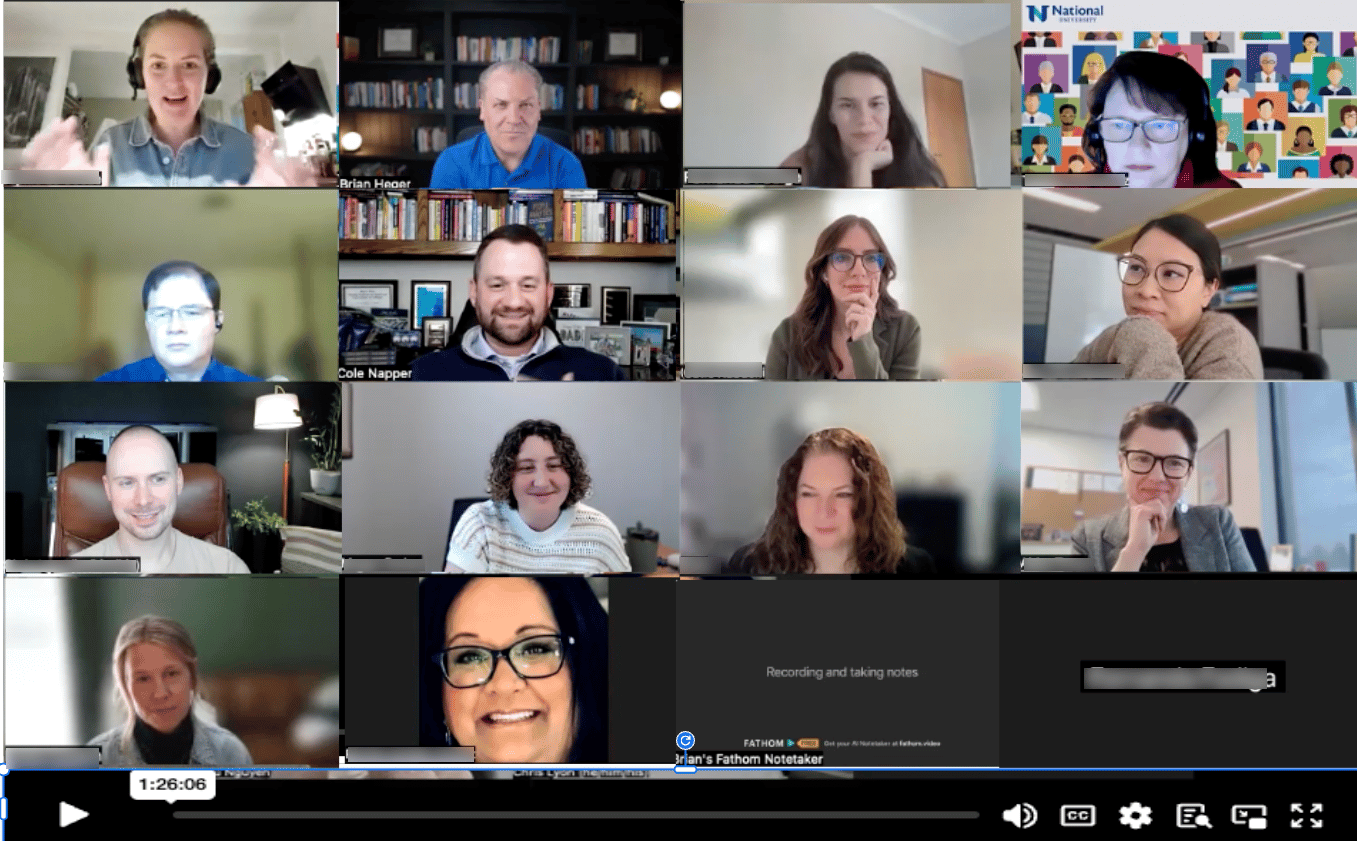
Screenshot of a previous discussion
⬇️ Now let’s dive in.

THIS WEEK'S EDGE

PERFORMANCE AND POTENTIAL
Marc Effron provides a review of performance management and assessing potential, along with specific actions to strengthen each.

Two talent practices that enable business strategy execution are performance management (PM) and organizational talent reviews (OTR). On one hand, PM ensures strategy gets translated into the right goals at the right levels and executed with accountability. On the other, OTR identifies those with the greatest potential to take on bigger or more complex roles and puts the right development in place to accelerate their readiness. A new article by Marc Effron offers a candid assessment of both. Among the various insights, two I want to highlight. First, while PM can serve many purposes (development, engagement, compensation decisions), it can only do one thing really well. When PM tries to solve multiple purposes at once, it tends to serve none of them well. Second, on assessing potential, decades of research show consistent findings about high-potentials demonstrated capabilities (e.g. cognitive ability, learning velocity), just grouped and expressed in slightly different language by different firms. As Marc notes, since the science on potential is well established, the bigger challenge for most organizations is often the execution (e.g., developing identified talent, holding managers accountable for their growth) rather than the potential model itself. For those in my private community, Talent Edge Circle, you can access two of our separate discussion replays in our resource library: one we had with with Marc on PM and one with Allan Church, Ph.D. on assessing potential. And as a bonus, here is one of my cheat sheets on talent reviews.

SKILLS
An open-access library of 30 employer-validated skill profiles co-created by organizations such as Walmart, Microsoft, Bank of America, and Accenture.

As HR practitioners help their organizations navigate the evolving skill demands across roles, this updated open-access resource includes employer-validated skill profiles for 30 roles representing 35 million U.S. workers. It was developed through the Skills-First Working Group, consisting of practitioners from organizations such as Walmart, Microsoft, Bank of America, Accenture, and others. Roles range from Project Management Specialists and Data Scientists to Financial Analysts and Software Developers. Each profile includes: 1) top skills for the role, 2) skill definitions describing how each skill is used in that specific role, 3) market trends showing which skills are rising or declining in demand, and what skills earn a premium in the market, and 4) proficiency standards defining what basic, intermediate, and advanced mastery look like. Clicking on any individual skill within a profile reveals more detail. For example, within the HR Specialist profile, HRIS skill demand has grown 31.8% over five years, Succession Planning carries an 18.4% wage premium, and Full-Cycle Recruitment has declined 15.4%. As a bonus, I'm including the Skills-First Implementation Playbook, published in September 2025, which provides the foundation for the updated skill taxonomy. For those in my private community, Talent Edge Circle, you can check out the replay (in our private platform) of our discussion with Ravin Jesuthasan on skills-based talent practices.

HR IMPACT
My slide that can help HR leaders and their teams reflect on mid-year accomplishments and assess whether the work underway is connected to the business outcomes that matter most.

With the start of June and the midpoint of the calendar year just two weeks away, HR teams may be reflecting on what they have accomplished so far and how those accomplishments are creating value for the organization and the stakeholders they serve. It is also a good time to reflect on the work ahead, where we are relative to achieving our objectives, and to determine any adjustments needed to set ourselves up for success in the second half. To help HR leaders and their teams pause and reflect at this point in the year, I am sharing a one-page slide I originally created for year-end to organize accomplishments by the business outcomes they enabled. While I tend to use it toward year-end, I also find it a useful ongoing tool for checking whether what we are working on is connecting to real business outcomes. I am sharing it here for those who want to reflect now, reset, and use it as a springboard for the work ahead. The slide shows an example of how HR results can be linked to five business outcomes (Revenue Growth, Profitability and Margin Improvement, Operational Efficiency, Customer Satisfaction and Experience, and Strategic Agility and Speed to Market) but you can easily adapt it to focus on the outcomes most relevant to your context. As a bonus, I am resharing my additional one-page slide, Framing Talent Initiatives in Business Context, which helps shift the narrative from "here is the HR initiative" to "here is the business problem we are solving/opportunity to unlock, why it matters, and what is at stake if we wait or do not act." Both slides are excerpts from additional resources in my private community, Talent Edge Circle.

ORGANIZATION DESIGN & OPERATING MODEL
A new article explores how AI is reshaping corporate functions with implications for operating models, workflows, and talent.

Much has been written about AI's impact on the workforce, but a new article from BCG turns the lens specifically on corporate functions (finance, HR, legal, compliance, procurement, and technology). It contrasts where most corporate functions operate today (siloed departments, manual handoffs, and AI layered onto unchanged operating models) with where they need to shift, what BCG refers to as "Functions of the Future" (FoF): leaner, more automated corporate functions designed to perform at AI speed, with integrated workflows, flatter leadership structures, and digital fluency embedded into how work gets done. Although the article offers various insights for making this shift, one I want to zoom in on is digital fluency as a talent requirement for hiring, promotion, and leadership. In an FoF model, digital fluency is treated as a baseline expectation. A few questions HR leaders can help corporate functions think through: How is digital fluency defined in our organization, and are our hiring criteria reflecting that? Are we assessing it in promotion decisions? And since succession planning is a priority for most organizations, how will the future requirements of corporate functions, including digital fluency, change succession plans for successors who were identified based on criteria that may no longer reflect the new reality? These are questions worth raising now, before talent decisions fall further behind the pace of change.

AI IN THE WORKPLACE
A new synthesis from MIT IDE research scientists draws on three working papers on different aspects of the impact of AI. Links to all three papers are also provided.

As we continue to gain guidance from research-based insights on AI's impact, this synthesis from the MIT Initiative on the Digital Economy, based on research presented by MIT IDE Research Director Neil Thompson and colleagues at the April 2026 IDE Annual Conference, draws on three working papers, each examining a different aspect of how AI is affecting work. At a high level, the three papers explore: 1) whether automation should be thought of as a spectrum rather than a binary choice (automate or do not automate); 2) whether AI's workforce impact is arriving suddenly or gradually; and 3) how automation affects the value of remaining human expertise. (You can click on the numbers above to access the full research paper). One I want to highlight further is the first paper, which frames automation not as a yes or no decision but as a spectrum across three categories: no automation, partial automation, and full automation. One added value of this research is that it introduces two factors that help determine where a given task falls on the spectrum: cost (the investment required to build and sustain the automation relative to the value it produces) and complexity (how much judgment, context, and tacit knowledge the task requires). As a bonus, I am resharing the recent AI Index report by Stanford Institute for Human-Centered AI, which is widely recognized as one of the most credible and comprehensive sources of AI data and insights.
MOST POPULAR FROM LAST WEEK
PERFORMANCE AND DEVELOPMENT
My cheat sheet with 9 scenarios that can undermine performance, along with tactics to identify and address each.

There is more content in this issue, but you must be subscribed (or logged in if you are a subscriber) to access the rest. It is FREE to sign up, and a new issue comes out every Sunday, 6 PM EST! ⬇️