- Talent Edge Weekly
- Posts
- Talent Edge Weekly - Issue #355
Talent Edge Weekly - Issue #355
Applying ROI discipline to human capital, aligning talent strategy with AI transformation, talent hoarding, AI's impact on incentive plans, and AI jobs transition framework.

Brian Heger
July 05, 2026

SPONSORED BY

Welcome to the new issue of Talent Edge Weekly!
First, a shout-out to Barb Hickey, Global Manager, Talent Management at HireRight, for referring new subscribers to Talent Edge Weekly. Thank you, Barb, for your support of this newsletter!
PRESENTED BY 365Talents
A Docebo Company
Your 2026 skills plan is not stalling because of strategy. It is stalling because of the work nobody has time to do.
The business case that keeps getting deferred. The RFP that never quite gets started. The rollout plan that lives only in your head.
Move past these bottlenecks. Here are 14 ready-to-use templates to build your skills strategy, covering business case, vendor selection, transformation and rollout. Browse by category, download what you need, customize for your organization.
P.S. - Want to see 365Talents’ AI-powered skills intelligence in action? Book a demo
Have a product or service that could provide value to our active 58,000+ Talent Edge Weekly subscribers? Become a potential sponsor.
THIS WEEK'S CONTENT
Below are links and descriptions of the topics covered in this issue. If you're interested in my deep dive, you can read the full newsletter.
The 5i Model: A Strategic Framework for Talent Management | Holly Tyson in The Age of HR | A chapter from the eBook (The Age of HR) explores how organizations can apply the same ROI discipline to human capital that they apply to financial capital by mapping role criticality against talent caliber.
Your Talent Strategy Has to Keep Up with Your AI Transformation | Harvard Business Review | A new article introduces the concept of organizational "capability debt," the gap between the leadership judgment a company will need and what its shrinking early-career pipeline is actually building.
Is Talent Hoarding Blocking Internal Mobility in Your Organization? A Self-Reflection for Managers | Brian Heger | My one-page diagnostic to help managers identify and address behaviors that may unintentionally limit internal mobility within the organization.
AI in Incentive Plans: Opportunity, Risk, and the Role of the Compensation Committee | Harvard Law School Forum on Corporate Governance | A new article argues that as AI reshapes how business value is created, existing incentive frameworks should be evaluated to ensure they still reflect actual performance drivers.
The AI Jobs Transition Framework for the EU | OpenAI Economic Research | A new 17-page report extends OpenAI's recent US jobs-transition analysis to more than 2,600 EU occupations using ESCO and Eurostat data, providing a breakdown of insights by country-level.
Also, check out my job cuts tracker & Chief HR Officer move of the week, which is an excerpt from my CHROs on the Go platform.
My Private Community for Internal HR
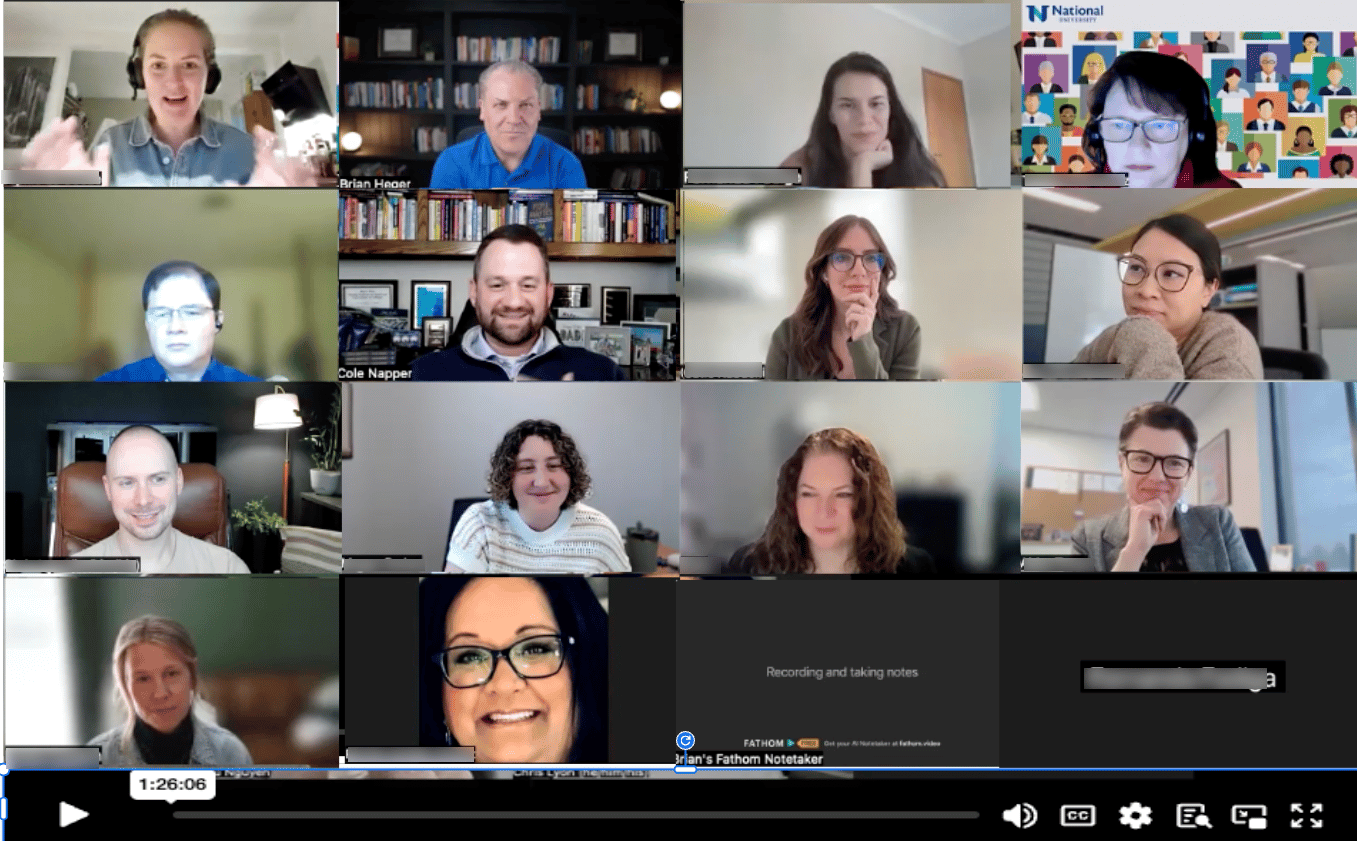
We are now in July, and the first half of 2026 is behind us. For many HR practitioners, the window to make meaningful progress on this year's most critical priorities is getting shorter, not longer.
As someone who has spent most of his career as an internal HR practitioner, I know firsthand how valuable it is to have a trusted, curated group of other internal HR practitioners who are in similar roles, navigating similar priorities, and working through similar talent challenges in other organizations.
If you want to go deeper with me and other internal HR practitioners on talent topics tied to your most critical priorities, I invite you to learn more about my private community, Talent Edge Circle.
The goal is simple: to help you cut through the noise and complexity so you can accelerate the execution of your critical talent priorities.
Don't let the rest of the year pass by without the right support and community around you. Apply today.
⬇️ Now let’s dive in.

Brian Heger
Follow on LinkedIn
THIS WEEK'S EDGE

TALENT MANAGEMENT
A chapter from the eBook (The Age of HR) explores how organizations can apply the same ROI discipline to human capital that they apply to financial capital by mapping role criticality against talent caliber.

Over the years, I have written several posts and shared my tools on talent management for critical roles: roles that have a disproportionate impact on an organization's strategy execution and competitive advantage. These tools range from frameworks for identifying which roles are truly critical, to assessing and managing risks in these roles, to ensuring that an organization's top talent occupies these roles so the organization can create stakeholder value faster. With many organizations getting ready to conduct talent reviews, of which critical roles and succession planning are part, I want to highlight chapter 25, beginning on page 120, by Chief People Officer, Holly Tyson, in the excellent, open access eBook, The Age of HR. Holly reinforces how organizations should manage human capital like financial capital, with targeted development, deployment, and measurement of ROI. Her 5i Model maps Role Criticality (core, critical, and differentiating) against Talent Caliber (core, key, and top talent), prescribing one of five actions (invest, improve, inspect, increase impact, or inject), based on where a role and its incumbent land on this matrix. The framework helps force conversations and decisions that talent reviews can easily miss: which roles matter most, whether incumbents perform at the level required, and where differentiated talent investment should be made. For those in my private community for internal HR practitioners, Talent Edge Circle, I’m looking forward to our upcoming discussion on the strategic talent management of critical roles. And as a bonus, here is one of my cheat sheets on managing talent risks in critical roles.

AI & EARLY-CAREER TALENT
A new article introduces the concept of organizational "capability debt," the gap between the leadership judgment a company will need and what its shrinking early-career pipeline is actually building.

The impact of AI on entry-level roles continues to gain much attention. In the last few weeks alone, I have written several posts addressing different angles of this topic. This has included data from Stanford's 2026 AI Index Report showing meaningful employment declines among early-career workers in AI-exposed roles like software development and customer support. It has also included a World Economic Forum report, offering a framework for safeguarding and reinventing early-career pathways. And I have shared an article by Amy Edmondson and Tomas Chamorro-Premuzic, on redesigning entry-level jobs rather than eliminating them outright. A new HBR article by Jenny Fernandez builds on this topic by naming a key implication of a shrinking early-career pipeline: organizational "capability debt." This refers to the accumulating gap between the judgment and tacit skills a company will need in its future leaders and what its shrinking early-career pipeline is actually creating, often unknowingly or quietly. Her three recommended actions are 1) redesigning entry-level roles as capability-building cohorts, 2) building a distributed apprenticeship pipeline across the organization, and 3) auditing and repaying the capability debt that has already accumulated. To build on the third point, I would add that it is important to identify leading indicators that could suggest an organization is accumulating capability debt. The ability to detect this early provides an advantage, giving organizations time to adjust before capability debt surfaces in reduced business performance.

INTERNAL MOBILITY
My one-page diagnostic to help managers identify and address behaviors that may unintentionally limit internal mobility within the organization.

I previously shared my cheat sheet to help organizations evaluate whether their internal mobility policies and guidelines support or hinder internal talent movement. While some policies might be needed, others may create unintended barriers by over-regulating how and when internal moves occur. For example, some organizations require employees to remain in a role for a set period before applying for other internal opportunities. However, policies and guidelines aren’t the only thing that can unintentionally hinder internal talent movement. Some of the obstacles can be certain behaviors and mindsets, including a management practice sometimes referred to as talent hoarding. This happens when managers discourage high performers (either knowingly or unknowingly) from pursuing internal opportunities. Since many managers may not realize they’re exhibiting these behaviors, self-awareness is a critical first step. To support this, here’s my one-page diagnostic with 10 reflection statements to help managers assess their talent-sharing mindset. As many organizations prepare for talent reviews this time of year, when talent movement is often discussed, this cheat sheet can serve as a timely reference to help managers self-assess whether they are enabling or hindering internal mobility. This awareness could help promote greater talent sharing, resulting in shared benefits for both the organization and its individual employees.

AI’S IMPACT ON INCENTIVE PLANS
A new article argues that as AI reshapes how business value is created, existing incentive frameworks should be evaluated to ensure they still reflect actual performance drivers.

As AI continues to reshape how organizations operate, one important topic in the AI discussion that seems to receive less attention is how compensation and incentive plans will need to evolve to reflect actual performance drivers. For example, one of several questions that begin to emerge: When an executive's team uses AI to hit a target faster or cheaper, has that executive (and team) actually performed better, or has the technology simply lowered the bar for what "better" looks like? A new memorandum on the Harvard Law School Forum on Corporate Governance suggests most companies have not seriously addressed this question. Based on a review of roughly 2,500 proxy statements filed in 2026, the analysis identified only 58 companies, about 2%, that incorporate AI into executive incentive programs through formal metrics or strategic objectives, and of those, only 12% use an explicit AI metric. Most organizations instead embed AI within broader transformation or workforce objectives rather than naming it directly. The authors note that this gap matters because as AI increasingly drives measurable outcomes, compensation committees and HR leaders will need a clear philosophy and aligned practices. As CHROs and compensation committees evaluate how AI fits into incentive plans, the article offers seven guiding questions. As a bonus, here is a June 2026 Corporate Board Member article on how a few companies, including Salesforce, are beginning to quantify AI's contribution in executive pay design.

AI’s IMPACT ON JOBS
A new 17-page report extends OpenAI's recent US jobs-transition analysis to more than 2,600 EU occupations using ESCO and Eurostat data, providing a breakdown of insights by country-level.

A few weeks ago, I shared OpenAI's AI Jobs Transition Framework for the US, a 32-page report which offered a way to classify jobs by how AI is likely to affect them, sorting occupations into those likely to be automated, likely to reorganize, likely to grow with AI, or facing less near-term change. OpenAI's Economic Research team has just published a report extending that same framework to Europe, mapping AI's near-term impact across more than 2,600 EU occupations using ESCO taxonomy and Eurostat employment data. One headline finding is that Europe has a smaller share of jobs facing high automation potential than the US (14% versus 18%), but a larger share facing reorganization (27% versus 24%), a difference attributed to Europe's heavier weighting toward manufacturing, care, and public-service work rather than any difference in AI readiness. What I find helpful about this report is the country-level breakdown: Luxembourg, Sweden, and the Netherlands show the largest AI-growth potential, while Germany, Greece, and Italy carry the largest automation-risk shares. These types of data breakdowns are a reminder that there are nuances and differences across various locations that must be considered when understanding AI's implications on workforce planning and talent strategy. Both reports, the original US version and this newly released EU extension, provide an occupation-level starting point for country-specific workforce planning rather than a one-size-fits-all approach.
MOST POPULAR FROM LAST WEEK
AI-ENABLED COACHING
The inaugural ICF report explores how coaching might evolve by 2036 across four scenarios, ranging from AI-dominant delivery to community-centered human connection.

I recently had the pleasure of having Dr. Anna Tavis — Clinical Professor and Chair of the Human Capital Management Department at NYU and co-author of The Digital Coaching Revolution— join my private community, Talent Edge Circle, as a guest for a discussion on how AI-enabled and digital coaching are reshaping how organizations develop employees at scale. As this topic continues to generate strong interest among Talent Edge Weekly readers, I want to share this 76-page report by the International Coaching Federation. While published earlier this year, it remains highly relevant for HR, learning, and talent leaders thinking through how coaching strategy and tactics may need to evolve, including the role AI-enabled coaching might play.
BONUS RESOURCE
SUCCESSION PLANNING
My infographic with tips for addressing three challenges in succession.

🔓️ There is more content in this issue, but you must be subscribed to view it. Subscribe Now (it’s free) or sign in if you are already a subscriber!