- Talent Edge Weekly
- Posts
- Talent Edge Weekly - Issue #353
Talent Edge Weekly - Issue #353
Creating the human capital narrative, redesigning entry-level roles in the age of AI, the future of AI-enabled coaching, the impact of AI on middle managers, and a midyear tool for preventing goal creep as we head into the second half of the year.

Brian Heger
June 28, 2026

SPONSORED BY

Welcome to the new issue of Talent Edge Weekly!
First, a shout-out to Anh Thu Nguyen, Director of Organizational and Talent Effectiveness at Trimble, for referring new subscribers to Talent Edge Weekly. Thank you, Anh Thu, for your support of this newsletter!
PRESENTED BY i4cp
There are four ways organizations manifest agility and resilience. Only one drives sustained performance, yet most don't know which one they are.
i4cp's global research across 866 leaders in 57 countries identified two major findings worth paying attention to:
Being agile alone doesn’t guarantee high performance
Your organization’s agility profile predicts everything from employee engagement to burnout.
Download i4cp’s Executive Brief—Designed for Disruption— and identify your organization’s profile so you can turn it into a performance advantage.
Have a product or service that could provide value to our active 58,000+ Talent Edge Weekly subscribers? Become a potential sponsor.
THIS WEEK'S CONTENT
Below are links and descriptions of the topics covered in this issue. If you're interested in my deep dive, you can read the full newsletter.
Telling the Human Capital Narrative | Rebecca L. Ray and Patti P. Phillips in The Age of HR | A chapter from the recently released open-access eBook (Age of HR) examines how organizations can tailor their human capital narrative to different stakeholder groups, including the metrics that can support it.
AI and the Future of Entry-Level Work: A Framework for Safeguarding and Reinventing Early Career Pathways | World Economic Forum | A new 42-page report shares a four-component framework for reinventing early-career pathways in an AI era.
2026 ICF Coaching Futures Report: Envisioning Coaching’s Next Horizon | International Coaching Federation | The inaugural ICF report explores how coaching might evolve by 2036 across four scenarios, ranging from AI-dominant delivery to community-centered human connection.
AI Adoption Is Overloading Your Middle Managers | Harvard Business Review | A new article examines how AI adoption could be creating an uneven distribution of burden across organizational levels, with middle managers absorbing most of it.
Recalibrating Performance Goals, Priorities, and Capacity: A Midyear Tool for Preventing Goal Creep | Brian Heger | My cheat sheet provides six questions to help teams recalibrate performance goals, priorities, and capacity when new work is added midyear.
Also, check out my job cuts tracker & Chief HR Officer move of the week, which is an excerpt from my CHROs on the Go platform.
My Private Community for Internal HR
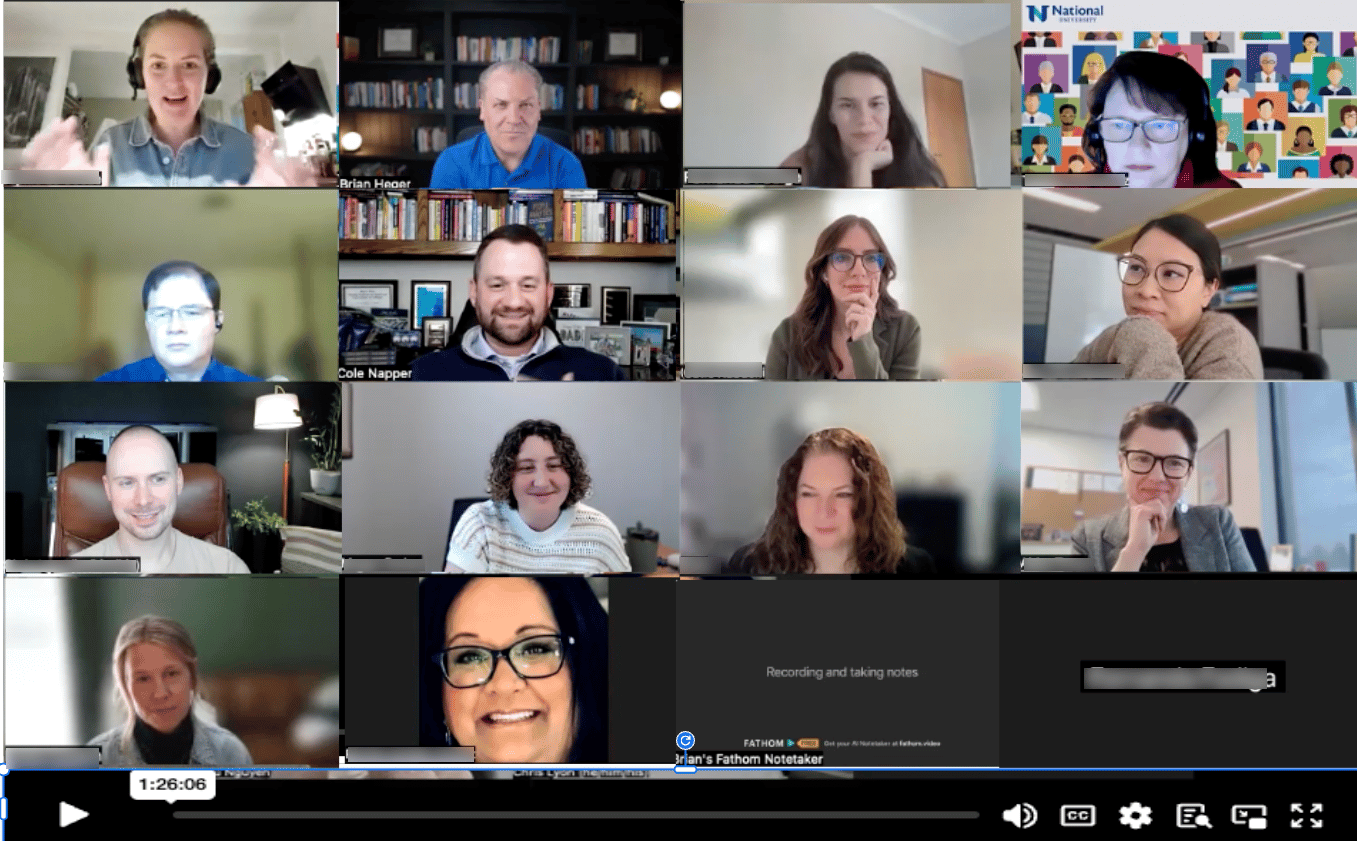
As we enter July, the first half of 2026 is behind us. For many HR practitioners, the window to make meaningful progress on this year's most critical priorities is getting shorter, not longer.
And as someone who has spent most of his career as an internal HR practitioner with organizations such as AT&T, Saks Fifth Avenue, and Bristol Myers Squibb, I know firsthand how valuable it is to have a trusted, curated group of other internal HR practitioners who are in similar roles, navigating similar priorities, and working through similar talent challenges in other organizations.
If you want to go deeper with me and other internal HR practitioners on talent topics tied to your most critical priorities, I invite you to learn more about my private community, Talent Edge Circle.
The goal is simple: to help you cut through the noise and complexity so you can accelerate the execution of your critical talent priorities.
Don't let the rest of the year pass by without the right support and community around you. Apply today.
⬇️ Now let’s dive in.

Brian Heger
Follow on LinkedIn
THIS WEEK'S EDGE

HR CREATING STAKEHOLDER VALUE
A chapter from the recently released open-access eBook (Age of HR) examines how organizations can tailor their human capital narrative to different stakeholder groups, including the metrics that can support it.

A few weeks ago, I shared a new open-access eBook, The Age of HR, edited by Anthony Nyberg, Rebecca Kehoe, Dave Ulrich, and Patrick Wright. This excellent 332-page resource brings together 85 global thought leaders across 62 chapters organized around four human capability domains: talent, organization, leadership, and HR. Given the depth and breadth of topics covered, I will highlight one chapter each week over the next few issues. This week, I want to draw attention to Chapter 56, Telling the Human Capital Narrative, by Patti Phillips and Rebecca Ray, beginning on page 262. They share how different stakeholder groups, such as investors, current and prospective employees, customers, and strategic partners, are each likely to be most interested in different parts of an organization's human capital narrative. Their guidance covers how to start with the business-related challenge or opportunity that has the attention of key stakeholders, a topic on which I have shared many of my own resources, including Framing Talent Initiatives Within the Business Context, through to the metrics that can help support the narrative shared with each group. As CHROs and their teams work to tailor their human capital narrative to key audiences while drawing from a single source of truth, this chapter provides practical and actionable guidance. For those in my private community for internal HR practitioners, Talent Edge Circle, I look forward to Patti joining us in August for a discussion on demonstrating the ROI of HR, and to Dave Ulrich joining us next month for a discussion on how HR practitioners can deliver more stakeholder value through human capability (talent, organization, leadership and HR).

IMPACT OF AI ON ENTRY-LEVEL ROLES
A new 42-page report shares a four-component framework for reinventing early-career pathways in an AI era.

Entry-level roles have long served as a foundation for building the institutional knowledge, judgment, and tacit skills that underpin long-term organizational capability. But as AI reshapes how work is performed, early-career workers are feeling the effects directly. This new report indicates that 37% of young workers globally are employed in occupations with medium to high exposure to AI-driven task change. The report offers a four-component framework for identifying where risk is emerging and what deliberate action is needed: job access (how organizations hire and onboard early-career talent as AI shifts role requirements); job design (how roles are restructured to develop capability rather than just execute tasks); talent pipelines (how organizations continue building future managers, specialists, and leaders); and education system alignment (how learning systems keep pace with rapidly changing workforce needs). Regarding job redesign, rather than simply automating entry-level tasks, some organizations are redesigning early-career roles so they continue building capability, judgment, and future leadership pipelines. In April, I made this post on how IBM is tripling its U.S. entry-level hiring in 2026 while redesigning junior roles around judgment, oversight, and customer engagement. Last month, I shared this post on how one banking organization is redesigning entry-level roles so junior analysts challenge AI outputs for incorrect assumptions, missing data, and logical flaws. How is AI changing early-career roles in your organization? Do you have a strategy for redefining them before the gap shows up in your leadership bench?

AI-ENABLED COACHING
The inaugural ICF report explores how coaching might evolve by 2036 across four scenarios, ranging from AI-dominant delivery to community-centered human connection.

Last month, I had the pleasure of having Dr. Anna Tavis — Clinical Professor and Chair of the Human Capital Management Department at NYU and author of The Digital Coaching Revolution (2024) — join my private community, Talent Edge Circle, as a guest for a discussion on how AI-enabled and digital coaching are reshaping how organizations develop employees at scale. We covered everything from the democratization of coaching and the emergence of fully AI-powered coaches to privacy and data ownership, to name a few. As this topic continues to generate strong interest among Talent Edge Weekly readers, I want to share this 76-page report by the International Coaching Federation. While published earlier this year, it remains highly relevant for HR, learning, and talent leaders thinking through how coaching strategy and tactics may need to evolve, including the role AI-enabled coaching might play. It provides a glimpse into five drivers of change shaping the future of coaching and four plausible scenarios for what coaching could look like by 2036, from a high-tech, high-collaboration future where AI expands access broadly, to scenarios marked by digital divides or a return to locally rooted, human-centered models. The report provides a useful starting point as you begin to think through how AI-enabled coaching might fit into your organization's overall coaching strategy. For those already in Talent Edge Circle, the replay and discussion notes from our conversation with Anna are also available in the community.

IMPACT OF AI ON MIDDLE MANAGERS
A new article examines how AI adoption could be creating an uneven distribution of burden across organizational levels, with middle managers absorbing most of it.

Much of the discussion around AI has focused on how efficiency gains will help employees create new forms of value. But does this hold true in all cases? A new HBR article explores who captures AI’s upside and who absorbs its costs. Based on 18 interviews across two major consulting firms, it finds AI is enabling role elevation at the junior and senior levels, but not in the middle. Junior consultants are moving into work they may not have done as early before, such as joining strategy conversations that were once more likely handled by senior staff. Senior leaders are also expanding the scope of work they can take on. But the middle manager layer is where the pressure seems to be building. Managers are now expected to validate AI outputs, catch what the authors call workslop (AI-generated content that looks professional but lacks substance), coach teams on AI use, and maintain quality standards, while still facing the same delivery pressure and limited formal support. This adds to an existing middle-manager burnout problem, already shaped by leaner structures, layoffs, and broader spans of control. It also raises a longer-term concern: if managers spend more time checking AI-generated work, they may have less capacity for the coaching and apprenticeship that help develop future leaders. While based on a small sample of consultants, the article usefully challenges the simplistic “AI frees everyone up for higher-value work” narrative. Question: When your organization measures AI adoption success, are you tracking what is happening to manager workload and capacity, and the unintended consequences on other important outcomes?

PERFORMANCE MANAGEMENT
My one-page cheat sheet provides six questions to help teams recalibrate performance goals, priorities, and capacity when new work is added midyear.

As we enter the second half of the calendar year, it is a natural time to pause, assess progress against performance goals set at the start, and determine what adjustments may be needed. It is even a time when new goals are added. If these additions are not managed intentionally, they can create competing priorities that outpace capacity, putting both original and new objectives at risk. This is often referred to as goal creep: goals gradually expand without recalibrating priorities and resources. To help teams address this, here is my one-page cheat sheet for evaluating any new goal and clarifying what will change to make room. It starts with a simple premise: when a new goal is added, either resources should be added, or an existing goal should be deprioritized. It also includes questions such as: What changed in business priorities that justifies adding this goal now? What are we willing to deprioritize? What minimum viable version can we commit to this cycle? Rather than being prescriptive, it is a strategic exercise to help teams stay intentional about what work is taken on in the second half, protect critical priorities, and increase the likelihood that goals translate into outcomes. As a bonus, I am also sharing another one of my cheat sheets to identify ways of working that can get in the way of execution, such as slow decisions, unclear ownership, or approval layers. Together, both cheat sheets can help teams recalibrate goals and ways of working for the second half of the year.
MOST POPULAR FROM LAST WEEK
CRITICAL ROLES AND AI
A new McKinsey article revisits the firm's Talent to Value framework, arguing that in an AI era, value is no longer created by critical roles alone.

Identifying and managing critical roles remains an important talent strategy for creating organizational stakeholder value. These roles often make up a small share of total roles, sometimes around 20%, but they have a much larger impact on strategy execution. I've shared many of my tools on critical roles, including two recent cheat sheets on identifying risks in these roles and determining if they are staffed with top talent. As AI reshapes how work gets done, a key question is emerging: how does the concept of a critical role and who occupies it need to evolve? A new McKinsey article this week explores that question, updating its Talent to Value Framework for an era in which value is no longer created by roles alone, but by humans and AI agents working together.
BONUS RESOURCES
SUCCESSION PLANNING
A curated set of five of my succession planning cheat sheets, each anchored in a practical question the resource helps you address in your organization..

🔓️ There is more content in this issue, but you must be subscribed to view it. Subscribe Now (it’s free) or sign in if you are already a subscriber!