- Talent Edge Weekly
- Posts
- Talent Edge Weekly - Issue #350
Talent Edge Weekly - Issue #350
Proactively managing risks in critical roles, workforce planning in the context of retirements, AI in the workplace, 2026 Global HR report, and development in place (in one' current role) as a development strategy.

Brian Heger
June 07, 2026

SPONSORED BY

Welcome to this new issue of Talent Edge Weekly!
First, a shout-out to Alexander Toro Alvarez, Head of HR Business Partnering at SBK Siemens, for referring new subscribers to Talent Edge Weekly. Thank you, Alexander, for your support of this newsletter!
PRESENTED BY Lightcast
You’re losing talent you already have. Not just to competitors, but to your own blind spots. Externally, your job postings are screening out strong candidates before you ever see them. Internally, your best people are leaving because they can’t see a path forward, and you can’t see them clearly enough to offer one.
Skills-focused hiring closes both gaps. It brings the right external candidates into view, and keeps your best internal talent from walking away by making internal mobility a real, structured option rather than an afterthought.
Download the Skills-Based Hiring Toolkit, Lightcast’s free step-by-step guide for HR leaders who want to build a talent strategy that works from the inside out.
Inside, you’ll find:
A maturity model to assess where your organization stands today, and define exactly where you want to go
A 12-step action plan, from initial planning through to full optimization, covering external sourcing, internal mobility, career pathways, and beyond
Free tools built in, including a Job Posting Optimizer and Disruptive Skills Matrix you can put to work immediately
Guidance on connecting internal skills data to external labour market intelligence so every talent decision is grounded in reality
Your next great hire might already be on your payroll or hidden beyond the resumé. This toolkit helps you find them.
THIS WEEK'S CONTENT
Below are links and descriptions of the topics covered in this issue. If you're interested in my deep dive, you can read the full newsletter.
Critical Role Identification Without Action Is Just a List | Brian Heger | My one-page cheat sheet to evaluate six risk factors in your critical roles and prioritize actions accordingly.
Future of Inclusion Lighthouses 2026 | World Economic Forum | A new 41-page report highlighting corporate inclusion practices, including Schneider Electric’s workforce planning approach that helps manage retirement risks.
AI at Work: Strategy Matters More Than Tools | BCG | A new 29-page report with findings from BCG’s fourth annual AI at Work survey, including how AI use and time savings are rising, but translating it into value remains a struggle.
2026 Global Human Resources Report | The Talent Strategy Group | A new 38-page report examines the perceptions of HR professionals about various aspects of the HR function.
Develop-in-Place: An Underutilized Tactic for Developing People and Organizational Capability at the Same Time | Brian Heger | My quick take on how develop-in-place tactics (in one’s current role) can be effective when organizations actively signal which skills matter most to their strategy.
Also, check out my job cuts tracker & Chief HR Officer move of the week, which is an excerpt from my CHROs on the Go platform.
Talent Edge Circle - my private community
If you’re an internal HR practitioner who wants to go deeper with me and other internal HR practitioners on talent topics tied to your most critical priorities, learn about my private community, Talent Edge Circle.
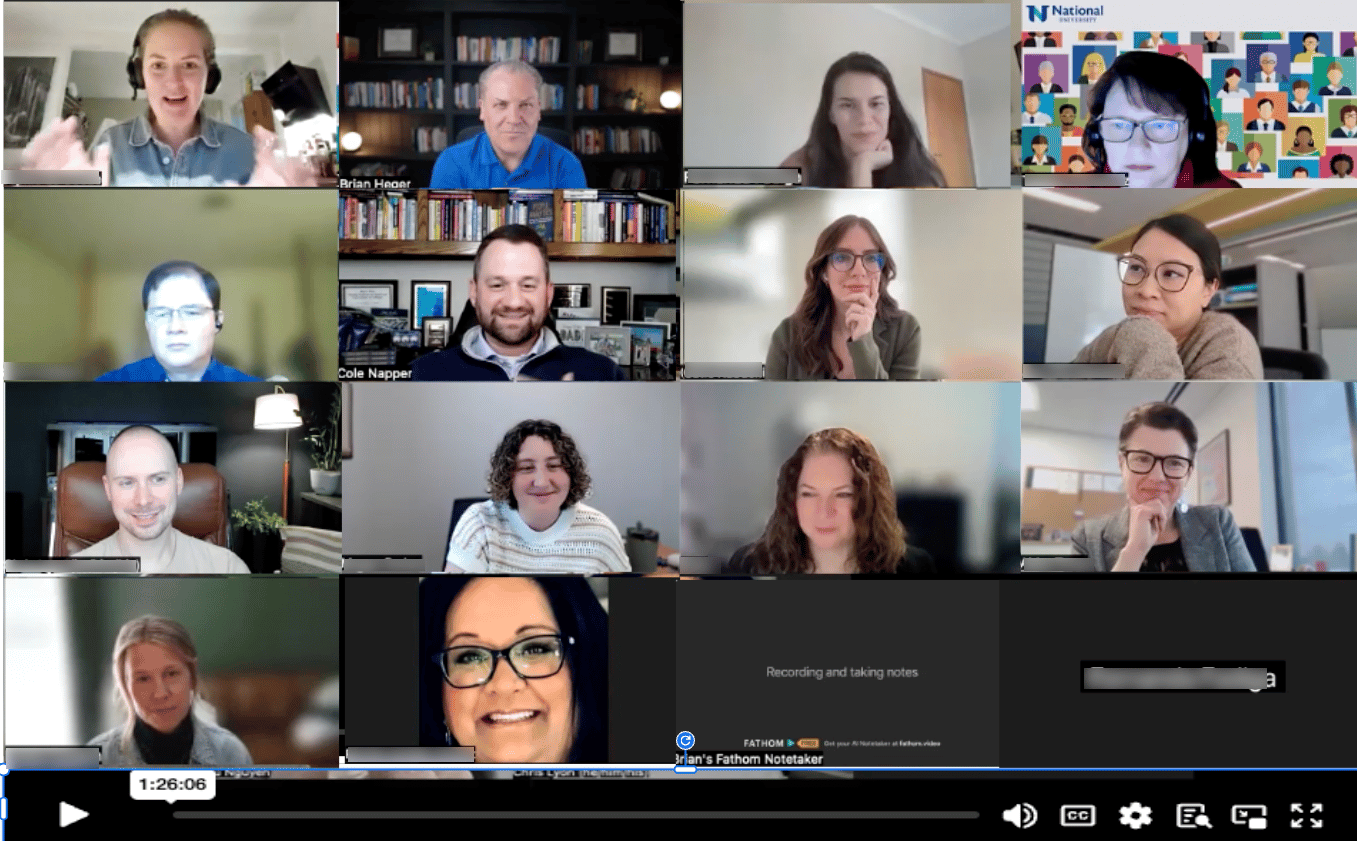
Screenshot of discussion with Cole Napper on Data-driven HR
A few discussions coming up:
🗓️ June 17, Adam Gibson, author of Agile Workforce Planning, will join Talent Edge Circle for a discussion on strategic workforce planning.
🗓️ July 22, Dave Ulrich, professor at the Ross School of Business (University of Michigan) and co-founder of The RBL Group, will join Talent Edge Circle for a discussion on creating stakeholder value through HR.
⬇️ Now let’s dive in.

THIS WEEK'S EDGE

SUCCESSION & TALENT MANAGEMENT
My one-page cheat sheet to evaluate six risk factors in your critical roles and prioritize actions accordingly.

In every organization, a segment of roles (~20%) have a disproportionately large impact on strategy execution and business performance. These are often referred to as critical or pivotal roles. But simply knowing which roles are critical isn't enough. The real value comes from strategically and proactively managing talent investments in these roles. A good starting point is knowing where risks exist in critical roles and how to convert these risks into a talent advantage. My cheat sheet helps you evaluate your critical roles across six risk factors: Top Talent Risk (the best talent is not in the role), Incumbent Risk (high risk of the incumbent leaving the role in the near future), Internal Bench Risk (weak internal pipeline for backfilling this role), Development Risk (challenging to develop internal talent within a reasonable timeframe and cost), External Talent Risk (hiring externally would take considerable time and cost), and Role Change Sensitivity Risk (the requirements and skills for this role are highly susceptible to rapid shifts from AI, automation, or changing business conditions). Input your critical roles (assuming you have a process for role identification) and click a box to indicate which risks apply. Upon completion, the visual will highlight where the greatest risks exist, helping you prioritize actions. This exercise is not about filling out a template. It is about jumpstarting a thought process and discussions that lead to more informed talent decisions in the roles that have an outsized impact on business performance.

WORKFORCE PLANNING + INCLUSION
A new 41-page report highlighting corporate inclusion practices, including Schneider Electric’s workforce planning approach that helps manage retirement risks.

An important factor in workforce planning is analyzing demographic data, including aging workforce trends and retirement projections, to understand how demographic shifts may affect the supply of available talent. These data can surface risks that are easy to overlook until they become urgent, such as the loss of critical knowledge when experienced employees retire. However, knowing retirement eligibility alone is insufficient since it does not mean an employee wants to retire or would not continue contributing in some form. Schneider Electric (SE) is one organization that has approached this topic with intention. Facing a projected shortage of 85 million skilled workers by 2030, with 20 to 25% of its workforce expected to retire within the next decade and 56% having over 30 years of tenure, SE launched its Senior Talent Program. The program uses four profiles to represent the career aspirations and needs of experienced employees age 51+: 1) Continue (remain in current role), 2) Pivot (shift to different work), 3) Accelerate (take on more responsibility), and 4) Transition (move toward retirement). Career conversation toolkits support managers and employees in using these profiles to plan unique career paths and inform workforce planning. SE’s case is in the WEF’s newly published Future of Inclusion Lighthouses 2026. I am also sharing a white paper with more on SE’s approach. For members of my private community, Talent Edge Circle, we are discussing workforce planning on 6/17 with thought leader Adam Gibson, author of Agile Workforce Planning.

AI
A new 29-page report with findings from BCG’s fourth annual AI at Work survey, including how AI use and time savings are rising, but translating it into value remains a struggle.

BCG just released the findings from its fourth annual AI at Work report, based on responses from 11,749 workers across 14 markets. One headline: 74% of frontline white-collar workers now regularly use AI, up 23 percentage points in one year, with 42% reporting a full workday or more saved per week. Time savings are even higher in functions such as marketing (60%), IT (53%), and human resources (50%). Yet, most organizations have not yet learned to convert that time into value. In fact, 66% of frontline employees who reported time savings say they receive limited or no guidance on what to do with it, and more than half are not reinvesting it into more strategic work. A few other stats I pulled from the report that might help to explain what is blocking that conversion: nearly half are spending more time directing AI than doing the work itself, with 72% saying AI has changed the skills expected of them. And 60% say the bar for what counts as good enough is rising. Add to this what BCG calls the joy paradox, where regular AI users report higher job satisfaction and greater cognitive load simultaneously, and these factors compound making it harder to translate “time savings” into true value. A good starting point for HR leaders: where is the greatest AI-driven time savings taking place in your organization, what is preventing it from being converted into value, and what is the plan for closing that gap?

HR SENTIMENT
A new 38-page report examines the perceptions of HR professionals about various aspects of the HR function.

There is no shortage of survey reports on how HR is thinking about the priorities it will focus on for any given year. However, this recently published report by The Talent Strategy Group takes a different angle by gaining insights on the perceptions that HR professionals have about the function itself, from how engaged HR is to where the profession is stalling. While there are several insights across this 38-page report — based on a census of 500+ HR professionals across levels, functions, and geographies — one that stood out is the recommendation to make commercial fluency and interest a hiring and promotion criterion for HR roles. The report finds that HR professionals who are in the function primarily to help their organization succeed financially, and who genuinely believe in the mission of the companies they work for, are more likely to reach senior levels, and that this orientation appears to be a condition of advancement rather than something that develops once people arrive. The report draws a pointed distinction: business acumen is a skill, meaning the ability to present HR in business terms. Commercial orientation is something different: it is whether someone is fundamentally in HR because they want their company to win. One practical implication for Chief HR Officers is to audit HR hiring and promotion criteria and ask whether it screens for commercial orientation, not just business acumen. There are many other insights in the report, so you will want to be sure to dig through it. Thanks to Marc Effron and The Talent Strategy Group for bringing us these insights.

DEVELOPMENT
My quick take on how develop-in-place tactics (in one’s current role) can be effective when organizations actively signal which skills matter most to their strategy.

Internal job movement—where employees transition into new roles within the same organization—is a valuable source of development and internal mobility. While an effective tactic, these moves are inherently limited in supply and must be augmented with other talent strategies. And as work increasingly gets organized beyond the boundaries of the job itself, organizations need approaches that develop people without relying solely on role changes. One underutilized approach is "develop in place," where managers and employees identify ways to use the current role to broaden development—not just for the individual, but in areas that build organizational capabilities where it matters most. This requires organizations to signal which skills matter most to their strategy, so develop-in-place opportunities reflect what the business needs, not just what feels like growth to the employee or manager. For employees, this strengthens candidacy for future opportunities; for the organization, it builds capacity to execute. Three questions to consider: What is our philosophy on employee development: to develop for performance in current role, building capabilities the organization needs, both, or something else? Have we identified the skills most critical to executing our strategy and made those visible to managers and employees? Are development plans connected to organizational capability gaps, or driven only by personal growth goals? I'll be sharing more on this, including tools to help, but wanted to put the idea out there first so you can begin to think this through for your organization.
MOST POPULAR FROM LAST WEEK
HR CREATING STAKEHOLDER VALUE
The Age of HR: Delivering Stakeholder Value Through Strategic Organizational Capability: Talent, Leadership, and Culture | Edited by Anthony Nyberg, Rebecca Kehoe, Dave Ulrich, and Patrick Wright
A new open-access 338-page ebook across 61 chapters featuring 85 global thought leaders on how HR can create stakeholder value.

This new open-access Ebook brings together 85 global thought leaders in the HR space and includes 61 chapters helping HR practitioners think more strategically about how HR creates value for employees, customers, investors, and communities. It covers everything from succession planning and workforce analytics to culture as competitive advantage, the CHRO as business leader, building organizations ready for agentic AI, and so much more. A special thanks to all contributors who helped bring this excellent resource to the field. And for those in my private community for internal HR practitioners, Talent Edge Circle, I'm looking forward to Dave Ulrich joining us next month for a discussion on creating stakeholder value through talent, leadership, organization, and the HR function.
🔓️ There is more content in this issue, but you must be subscribed to view it. Subscribe Now (it’s free) or sign in if you are already a subscriber!