- Talent Edge Weekly
- Posts
- Talent Edge Weekly - Issue #339
Talent Edge Weekly - Issue #339
BCG's Creating People Advantage 2026 report, CHRO Association survey results, skills-based hiring through credentials, labor market tool, and organizational transformation in the age of AI.

Brian Heger
March 22, 2026

SPONSORED BY

Welcome to this new issue of Talent Edge Weekly!
First, a shout-out to Bridget Penney, Chief People Officer at Applied Systems, for referring new subscribers to Talent Edge Weekly. Thank you, Bridget, for your support of this newsletter!
PRESENTED BY Draup
Talent Intelligence is central to workforce strategy, hiring, and organizational strategy. Yet most enterprises still can't quantify its financial impact in terms CFOs and business leaders understand.
Draup's Talent Intelligence ROI Framework closes that gap by isolating the measurable economic lift across cost, risk, and revenue.
The framework allows organizations to:
Quantify the exact revenue captured or vacancy cost avoided for every day shaved off Time-to-Fill
Eliminate $10K–$60K+ in agency fees per hire through smarter sourcing and expanded talent pools
Put a dollar figure on location strategy, role redesign, and succession planning decisions
Walk into any CFO conversation with a clear scorecard across Cost Reduction, Risk Reduction, and Revenue Uplift
If your organization is ready to treat Talent Intelligence as a financial discipline — not just a talent initiative—download the guide to see what's possible.
THIS WEEK'S CONTENT
Below are links and descriptions of the topics covered in this issue. If you're interested in my deep dive, you can read the full newsletter.
Four Power Moves for the CHRO | BCG and WFPMA | A new 32-page report that examines 28 people and talent practices, identifies top CHRO priorities, and outlines four strategic moves for driving greater business value.
2026 CHRO Survey Key Findings | CHRO Association | A new 16-page annual survey of CHROs taps into their priorities and concerns for 2026, including AI within the HR function.
Credential Fluency: The Hiring Advantage in the Race for Skills | Burning Glass Institute and OneTen | A new 31-page report shows why removing degree requirements alone isn't enough to make skills-based hiring work and what organizations must do instead.
Tracking the Labor Market and Jobs | The Brookings Institution and The Hamilton Project | A tool that helps users explore employment, labor force participation, and unemployment trends by demographic group, which is useful for workforce planning.
Organizational Transformation in the Age of AI: How Organizations Maximize AI's Potential | World Economic Forum | A new 43-page report on how leading organizations are using AI to redesign core workflows, including workforce planning, rather than simply automating isolated tasks.
Also, check out my job cuts tracker & Chief HR Officer move of the week, which is an excerpt from my CHROs on the Go platform.
TALENT EDGE CIRCLE
👉️ If you’re a member of Talent Edge Circle — my private community for internal HR practitioners — a quick reminder that we have our Hot Seat discussion this Wednesday 3/25.
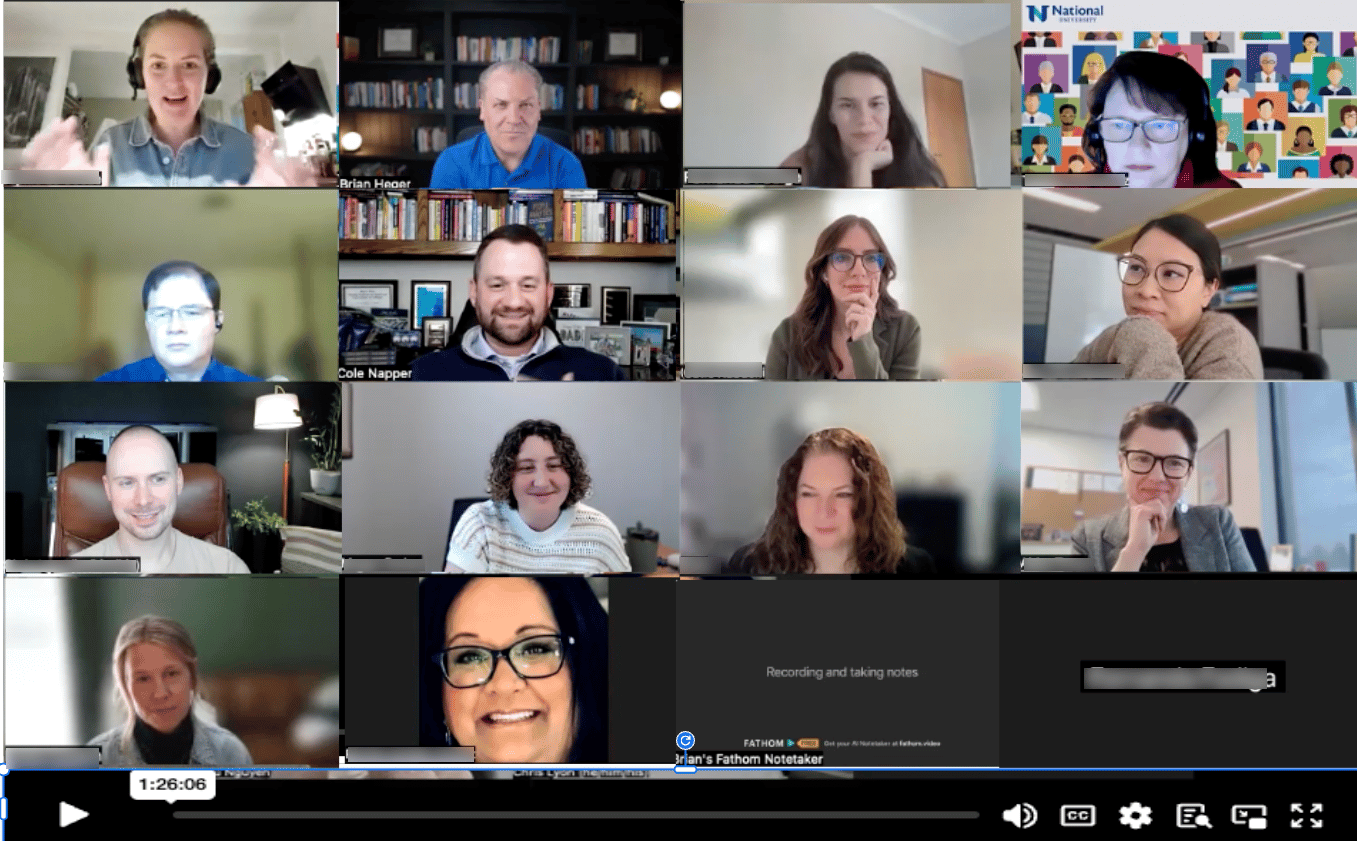
This is your opportunity to bring a decision you are weighing, a challenge where you are feeling stuck, or an idea you want to pressure-test, and get real-time feedback from me and your fellow internal HR practitioners to help you gain clarity on some immediate, practical next steps.
Interested in being considered for Talent Edge Circle? Learn more here.
⬇️ Now let’s dive in.

THIS WEEK'S EDGE

HR PRIORITIES AND WORKFORCE PLANNING
A new 32-page report that examines 28 people and talent practices, identifies top CHRO priorities, and outlines four strategic moves for driving greater business value.

BCG and the World Federation of People Management Association (WFPMA) just released the 2026 edition of their Creating People Advantage report, the latest in a series spanning two decades. Drawing on responses from more than 7,000 HR and business leaders, the report assesses 28 people and talent practices. One of the most revealing visuals is Exhibit 3 on page 8, which maps those practices by current capability and future importance to show where the biggest gaps exist. Strategic workforce planning (SWP) ranks #4 this year among the topics with the largest gap between future importance and current capability, and its importance has risen from #5 to #2 since 2023. Given that SWP shows up year after year as a critical priority with limited capability, at some point we need to ask: when will we begin closing the SWP capability gap in meaningful ways, and what will it take? One place to start is by clarifying the business cost of not prioritizing SWP. To help teams do that, I’m resharing my one-page template that connects a business problem or opportunity to a talent solution such as SWP, while clarifying the cost of inaction and the data that supports the case. Talent Edge Circle members can also access a diagnostic tool in our resource library to assess how well their talent and HR initiatives connect to the business problems they solve and the stakeholder value they create.

HR PRIORITIES AND AI
A new 16-page annual survey of CHROs taps into their priorities and concerns for 2026, including AI within the HR function.

This past week, the CHRO Association, in partnership with the Darla Moore School of Business, released its annual survey of approximately 150 CHROs on their priorities and concerns for 2026. While the 16-page report covers several topics, one key headline is that 91% of CHROs cite AI and workplace digitization as their most immediate concern. One reason behind that concern is that while productivity and efficiency gains are often cited as top reasons for AI-related investments, nearly half (47%) of CHROs report their organizations have not yet established clear productivity measures to measure return on investment. The report also notes that AI investments in HR are concentrated in a few areas, such as talent acquisition and recruiting automation and HR service delivery and self-service, raising an important question: where else might HR teams be overlooking opportunities to create business value? This creates an opportunity for HR teams to take a more intentional approach to identifying where AI can create the greatest business value, rather than focusing only on a narrow set of familiar use cases. To support that, I’m resharing my one-page editable worksheet that helps teams identify which AI-enabled HR use cases are most likely to generate stakeholder value by working through the business need, solution, expected outcomes, ROI, risks, and next steps.

SKILLS-BASED HIRING & CREDENTIALS
Credential Fluency: The Hiring Advantage in the Race for Skills | Burning Glass Institute and OneTen
A new 31-page report shows why removing degree requirements alone isn't enough to make skills-based hiring work and what organizations must do instead.

In February 2024, I shared a Harvard Business School and Burning Glass Institute report, Skills-Based Hiring: The Long Road from Pronouncements to Practice. Based on 11,300 roles at large firms, it found that removing degree requirements produced only a 3.5 percentage point increase in hiring workers without a bachelor’s degree. A new study from the Burning Glass Institute and OneTen, analyzing more than 1,000 major U.S. employers, reinforces that pattern. Removing degree requirements alone produced only a 2 percentage point increase in non-degreed hires. But firms in the top 10% of “credential fluency” were 11 percentage points more likely to hire credentialed workers. What makes the difference: mapping credentials to roles, embedding them in applicant tracking systems, training hiring managers to assess them, and signaling them in job postings and recruiting materials. For example, Infosys names AWS Architect certifications in postings, while HubSpot does the same for Inbound Marketing certifications. The report also surfaces a tech paradox: tech firms rarely list credential requirements, yet are most likely to hire credentialed workers. Overall, skills-based hiring requires more than removing degree requirements. It demands embedding a range of operational practices into how organizations actually hire, of which credential fluency is one practical example. To support that effort, here is one of my cheat sheets: 9 Questions for Evaluating if Degrees Are Required for a Role.
There is more content in this issue, but you must be subscribed (or logged in if you are a subscriber) to access the rest. It is FREE to sign up, and a new issue comes out every Sunday, 6 PM EST! ⬇️